PTBA Internship Report · internship-4-u23
Seam C and parting core record
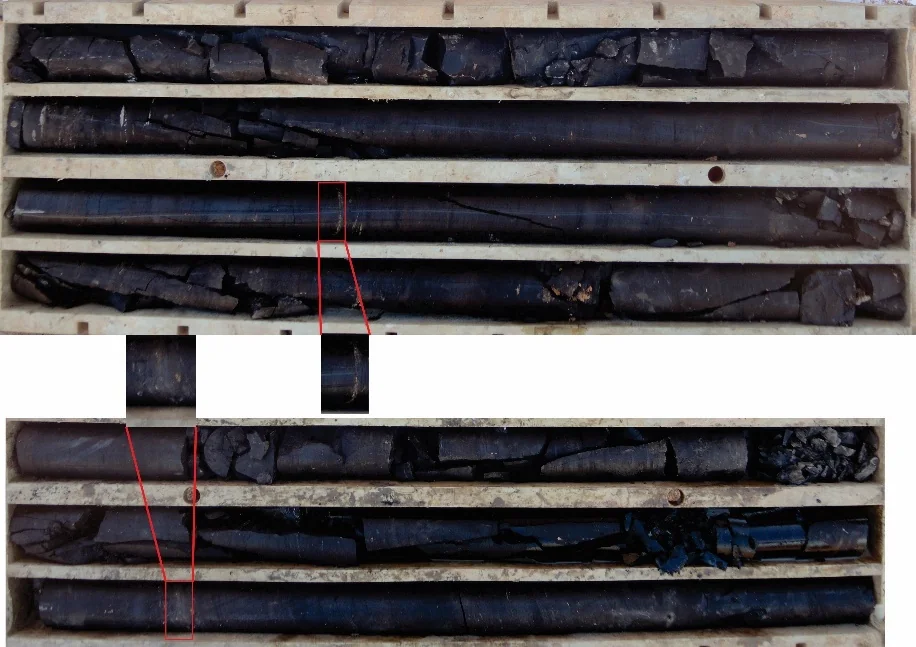
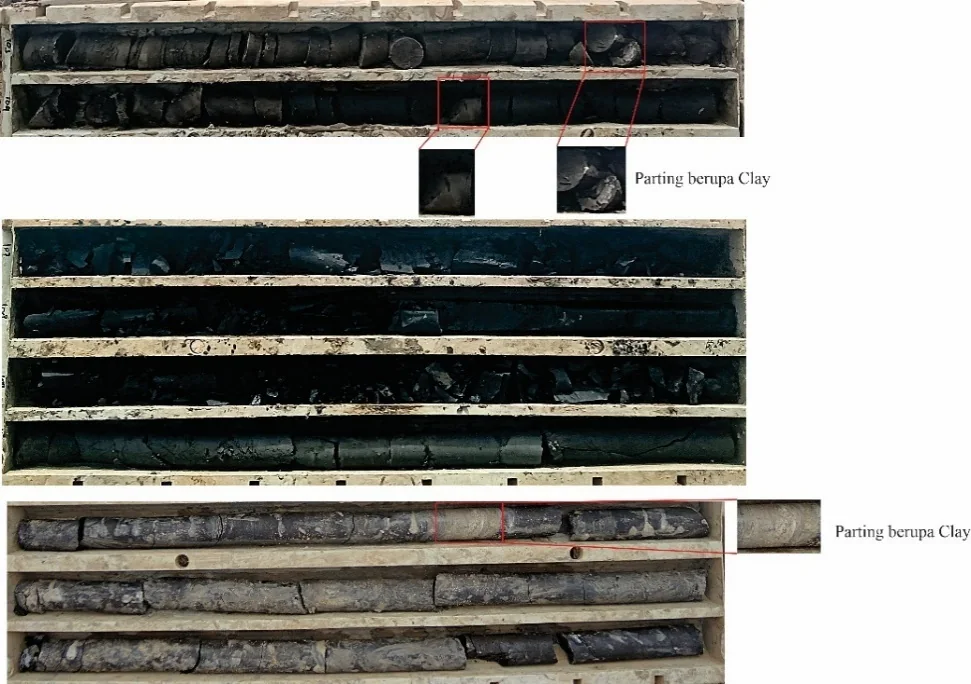
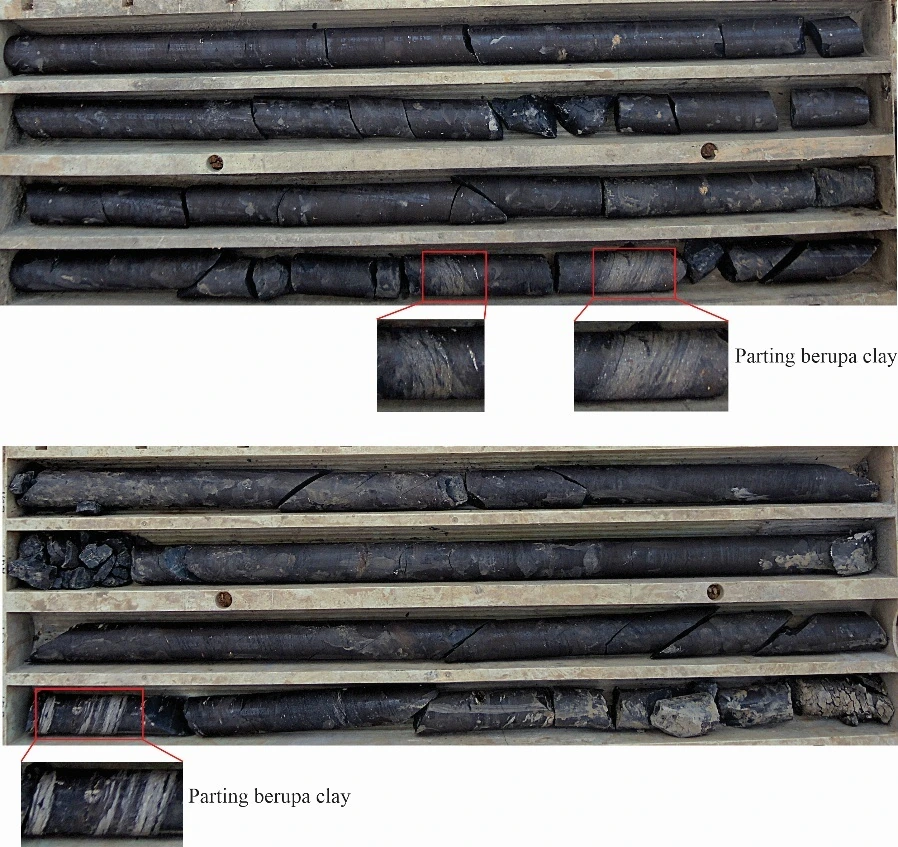
Seam C is traced through five boreholes and is described as an 8–14 m banded-coal interval containing a clay parting; the larger control count makes it better constrained laterally than Seams D, B2, B1, A2 or A1. In the internship report, the core photograph establishes recovered lithology and vertical order; it cannot measure continuity between boreholes.
SOURCE-LED TECHNICAL READING
Geological interpretation and evidential boundary
Seam C is traced through five boreholes and is described as an 8–14 m banded-coal interval containing a clay parting; the larger control count makes it better constrained laterally than Seams D, B2, B1, A2 or A1. In the internship report, the core photograph establishes recovered lithology and vertical order; it cannot measure continuity between boreholes. Brightness, dull bands and visible clay partings are valid core-scale descriptions, while peat composition, rank and saleable quality require the linked laboratory results. The five boreholes correlation becomes persuasive where core boundaries and depth-matched gamma–density markers reproduce the same roof–seam–floor succession; incomplete recovery, broken core and depth offsets remain competing explanations for an apparent thickness change. Where the same panel appears in the later thesis, it preserves the source history rather than adding a second independent observation.
- Source
- Private internship source vault · Chapter IV record
- Location in source
- 4.4.2 Seam C
- Image quality
- Source scan
- Record ID
- internship-4-u23