PTBA Internship Report · internship-4-u24
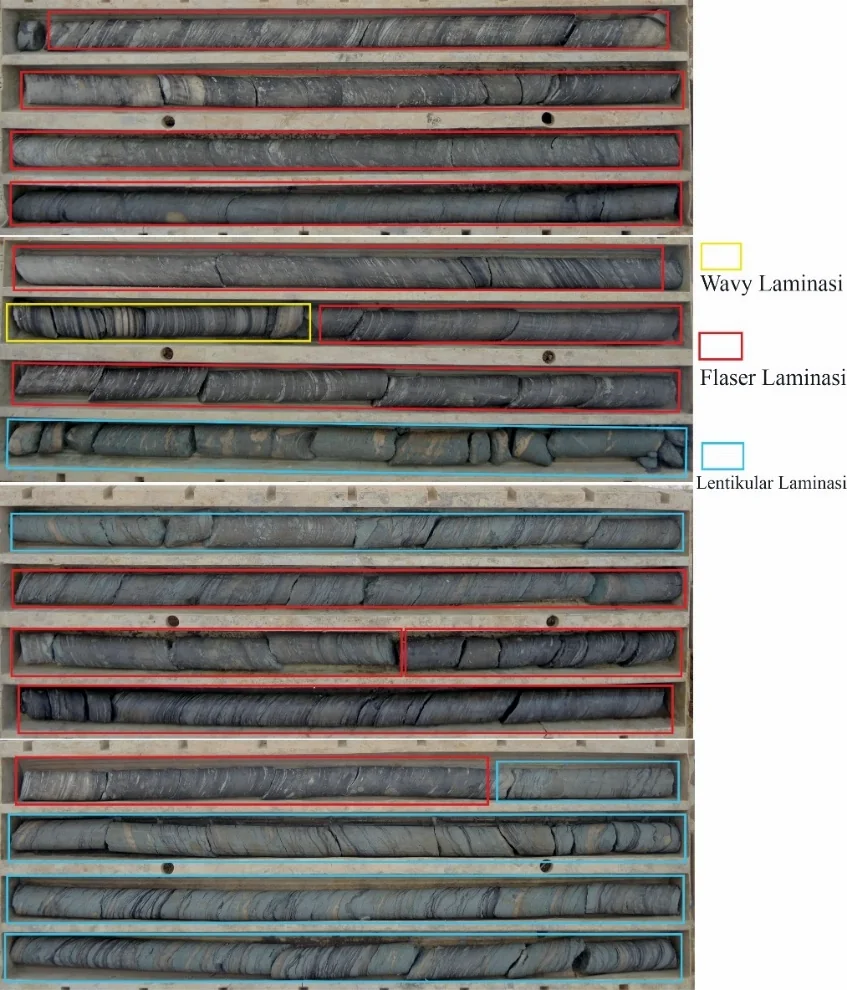
C–D interburden core record
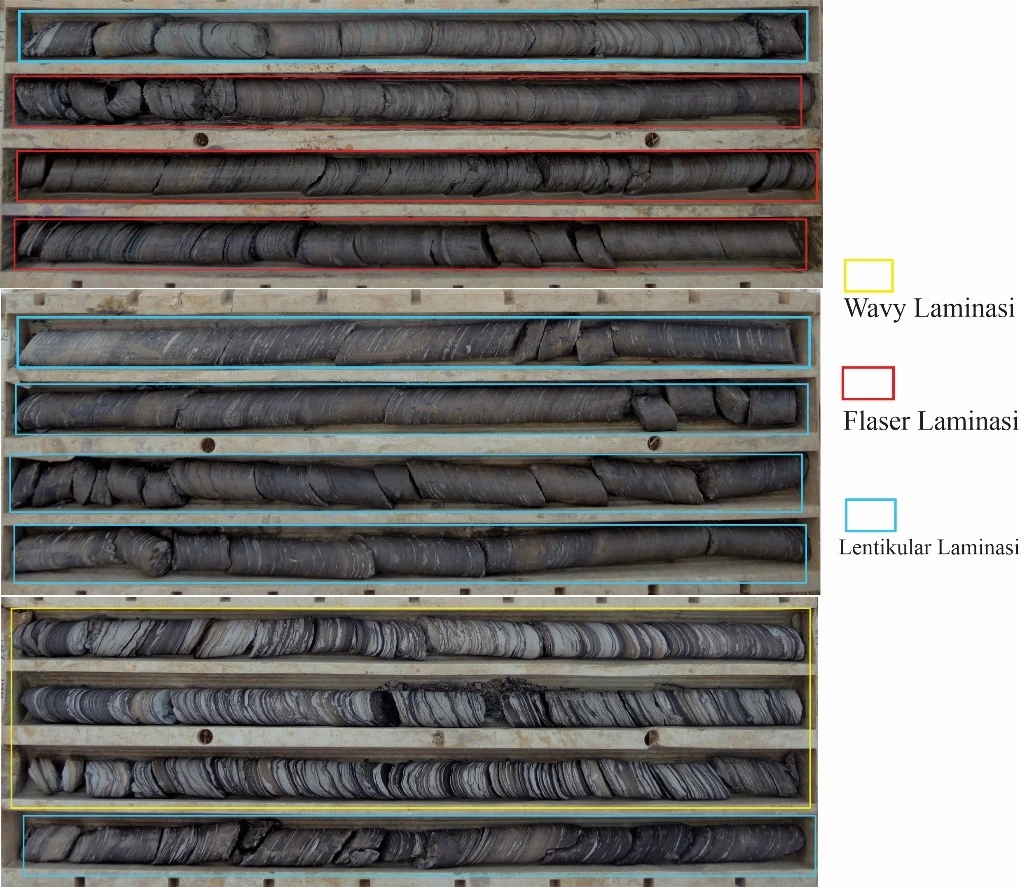
The C–D interburden is represented by very fine- to fine-grained sandstone and siltstone, locally coarser, with flaser, wavy and lenticular bedding. Those heterolithic structures record alternation between traction and suspension fallout, but they do not, on their own, distinguish tidal modulation from other fluctuating-current processes.
SOURCE-LED TECHNICAL READING
Geological interpretation and evidential boundary
The C–D interburden is represented by very fine- to fine-grained sandstone and siltstone, locally coarser, with flaser, wavy and lenticular bedding. Those heterolithic structures record alternation between traction and suspension fallout, but they do not, on their own, distinguish tidal modulation from other fluctuating-current processes. The internship core panel should be read from top to base, keeping contacts, grain-size shifts, structures and recovery gaps visible instead of compressing the interval into a single label. It becomes a useful marker only where neighbouring wells repeat both the facies order and the corresponding log response; visual resemblance alone does not establish time equivalence. Its later thesis counterpart is the same evidence carried forward, not an independent repeat sample.
- Source
- Private internship source vault · Chapter IV record
- Location in source
- 4.4.2 Seam C
- Image quality
- Standard
- Record ID
- internship-4-u24